Session 3 of Cardiology Management is led by Dr. George Lindbeck. This ECHO session reviews the anatomy and physiology of the heart and lungs, with a focus on congestive heart failure (CHF). It covers the causes and types of heart failure, key concepts like pulmonary edema and ventilation-perfusion mismatch, and how to recognize CHF clinically. […]
Read More… from Special Considerations for CHF Patients

Session 2 of Cardiology Management is led by Dr. George Lindbeck. This ECHO session focuses on prehospital cardiac care, emphasizing the role of 12-lead ECG in identifying and managing acute coronary events. It highlights key patterns and limitations of ECG interpretation, and uses case-based examples to build confidence in recognizing clinically significant findings in the […]
Read More… from The Electrocardiogram In STEMI

Session 2 of Developments in Trauma Resuscitation and Management for EMS is led by Michael Carunchio. This ECHO session provides an overview of thoracic trauma, including its definition and epidemiology. It explores key mechanisms like deceleration injuries and cavitation, and highlights vulnerable structures such as the ligamentum arteriosum. The session reviews major injuries including pneumothorax, […]
Read More… from Thoracic Trauma

Session 3 of Novel and Emerging Technologies is led by Dr. Harrison Brookeman. This ECHO session explores the growing role of point-of-care ultrasound (POCUS) in emergency and prehospital care. It reviews why ultrasound is increasingly used in the field, key EMS applications such as identifying tamponade, hypovolemia, tension pneumothorax, thrombosis, and internal hemorrhage, and evidence […]
Read More… from Ultrasound EMS Applications

Session 1 of Novel and Emerging Technologies is led by Dr. Kat Fivelstad. This ECHO session explores advances in organ replacement technologies and disability accommodations, while also addressing the controversy surrounding ableism in healthcare. Topics include mechanical circulatory support devices and what EMS providers need to know about them, differences in treatments such as total artificial […]
Read More… from Bionic Patients: Encountering Wearables, Patient Monitoring, Treatment at Home

Session 2 of Novel and Emerging Technologies is led by Dr. Kat Fivelstad. This ECHO session explores emerging innovations shaping the future of emergency and prehospital care. Topics include heads-up CPR and prehospital whole blood transfusion initiatives, as well as new transportation tools such as drones for search and rescue, disaster response, and improving rural […]
Read More… from Emerging Innovations in EMS: AI, Drones, CPR, and Beyond
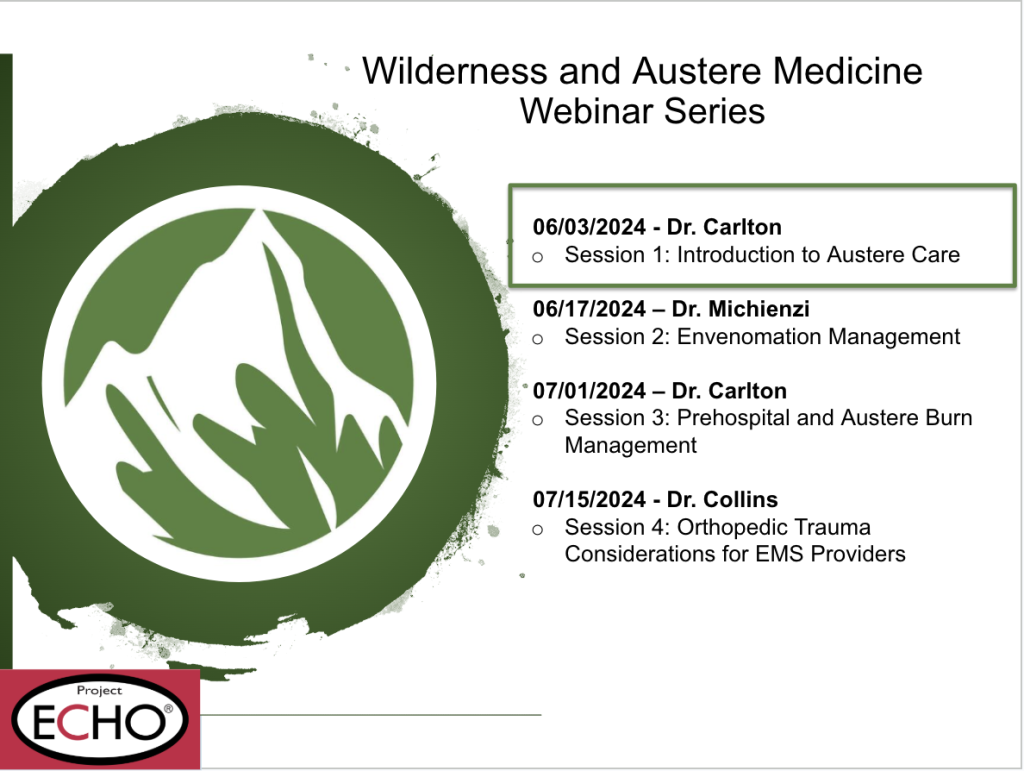
Session 1 of Wildnerness and Austere Medicine is led by Dr. Duncan Carlton. This ECHO session defines austere care and explores how it differs across military and civilian contexts. Participants examine scenarios ranging from battlefield medicine to rural and resource-limited civilian settings, as well as situations where hospital systems are strained. The discussion introduces a […]
Read More… from Introduction to Austere Care

Session 4 of Telestroke and Telemedicine Practice is led by Brett Schneider, Christine Buttenshaw, and Angel Talana. This ECHO session reviews the TJEMS EMS stroke/TIA guidelines and explores telemedicine-enabled prehospital stroke care, including iTREAT activation and a detailed case study. It examines prehospital telestroke using Pulsara covering background, workflow, EMS and patient benefits, supporting data, […]
Read More… from Prehospital Telehealth Models
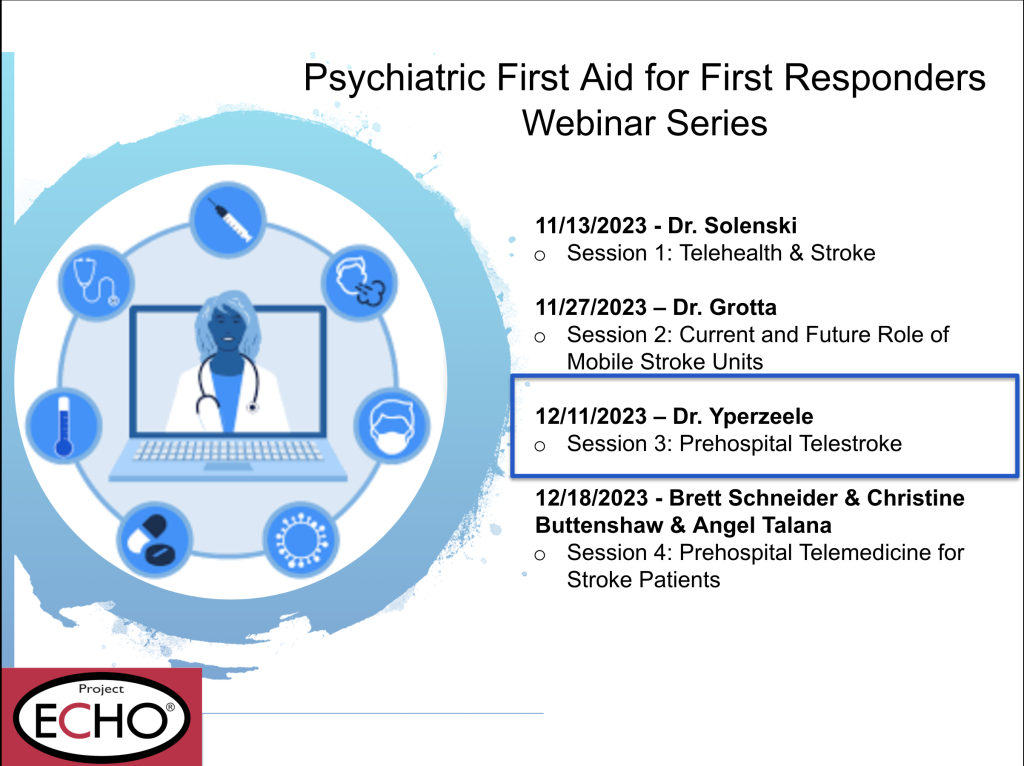
Session 3 of Telestroke and Telemedicine Practice is led by Dr. Laetitia Yperzeele. This ECHO session explores introduces the stroke rescue chain and explores the role of prehospital telestroke, including its goals and structure. It examines remote and unassisted neurological assessments via telemedicine, reviews pilot study findings, and evaluates the user-friendliness and acceptability of teleconsultation systems. […]
Read More… from Prehospital Telestroke
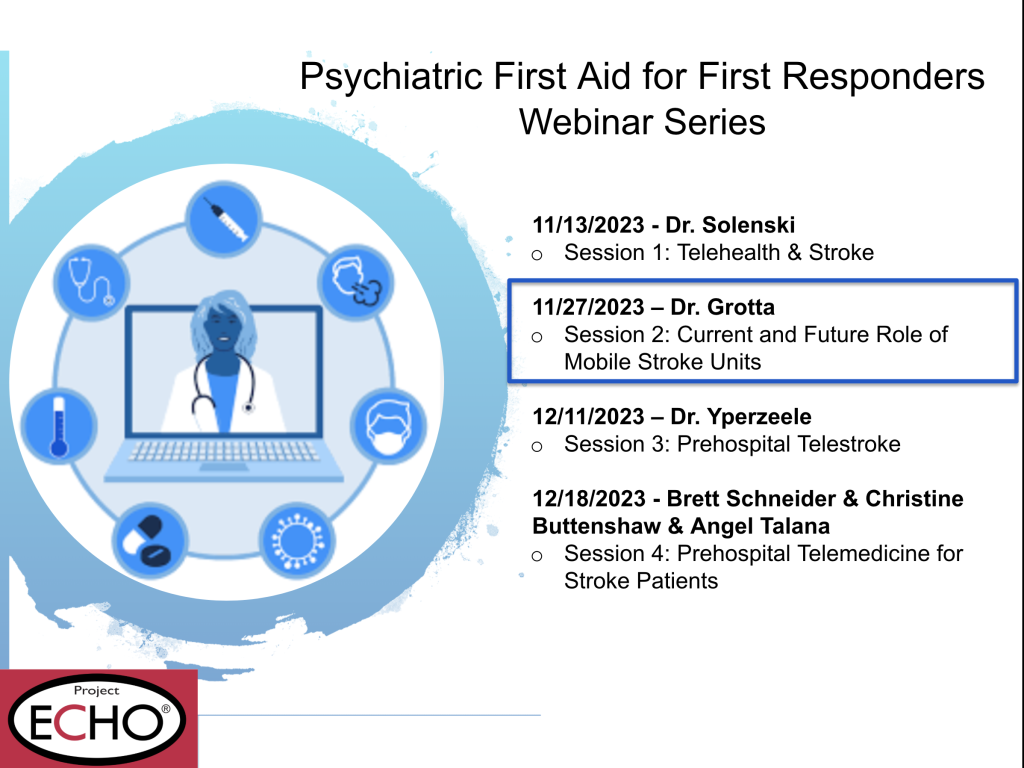
Session 2 of Telestroke and Telemedicine Practice is led by Dr. James Grotta. This ECHO session explores how mobile stroke units (MSUs) function as a triage tool, using stroke severity to guide decisions and emphasizing that severe strokes require time-based routing. It reviews evidence from randomized stroke triage trials and highlights the strong association between […]
Read More… from Current and Future Role of Mobile Stroke Units