Session 4 of Developments in Trauma Resuscitation and Management for EMS is led by Michael Carunchio. This ECHO session focuses on airway management in acute care, including intubation techniques, indications, and when to avoid intubation. It covers predicting and managing difficult airways, key anatomy and alignment, use of adjuncts like the bougie, and maneuvers such as […]
Read More… from A Holistic Approach to the Traumatic Airway

Session 3 of Developments in Trauma Resuscitation and Management for EMS is led by Michael Carunchio. This ECHO session reviews core brain anatomy and the pathophysiology of neurotrauma, including brain swelling, herniation, and elevated intracranial pressure. It covers key management strategies such as reducing ICP, hyperventilation, airway and pain management, and blood pressure control, while also […]
Read More… from Advanced Neurotrauma Concepts for the EMS Provider

Session 4 of Telestroke and Telemedicine Practice is led by Brett Schneider, Christine Buttenshaw, and Angel Talana. This ECHO session reviews the TJEMS EMS stroke/TIA guidelines and explores telemedicine-enabled prehospital stroke care, including iTREAT activation and a detailed case study. It examines prehospital telestroke using Pulsara covering background, workflow, EMS and patient benefits, supporting data, […]
Read More… from Prehospital Telehealth Models
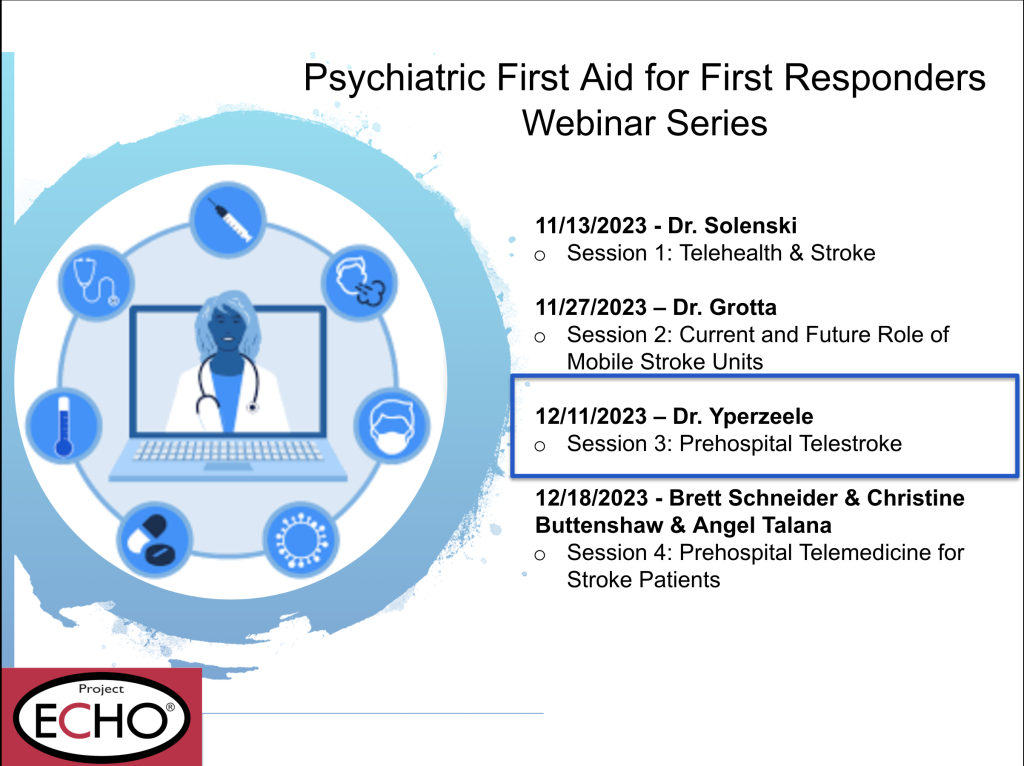
Session 3 of Telestroke and Telemedicine Practice is led by Dr. Laetitia Yperzeele. This ECHO session explores introduces the stroke rescue chain and explores the role of prehospital telestroke, including its goals and structure. It examines remote and unassisted neurological assessments via telemedicine, reviews pilot study findings, and evaluates the user-friendliness and acceptability of teleconsultation systems. […]
Read More… from Prehospital Telestroke
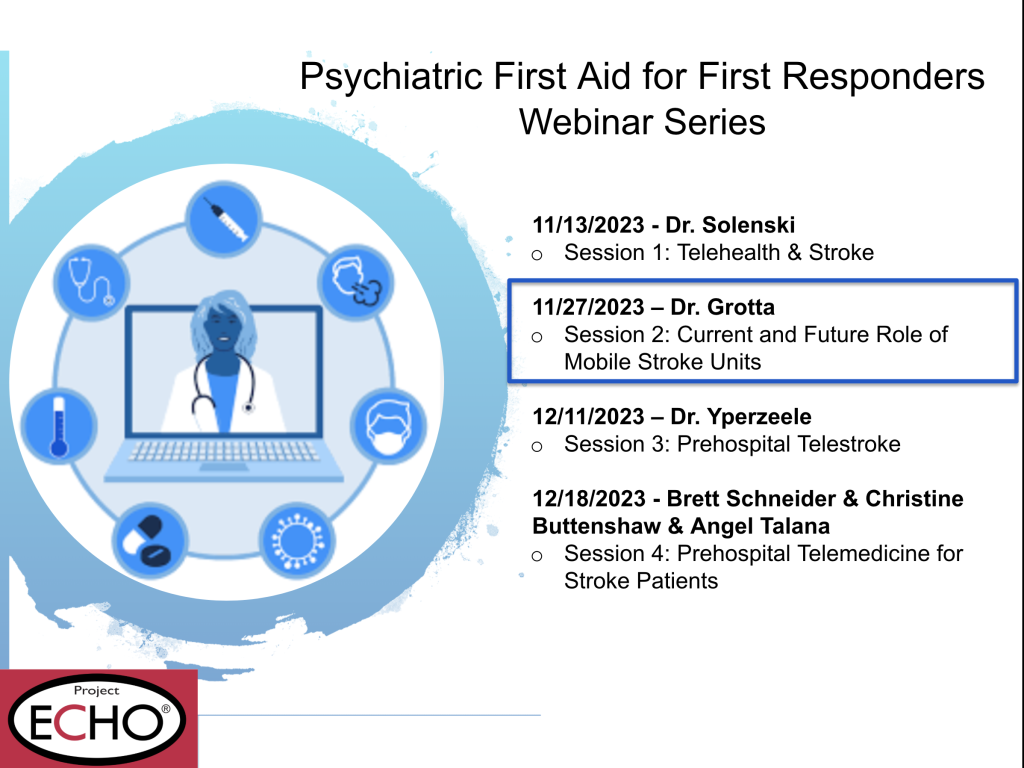
Session 2 of Telestroke and Telemedicine Practice is led by Dr. James Grotta. This ECHO session explores how mobile stroke units (MSUs) function as a triage tool, using stroke severity to guide decisions and emphasizing that severe strokes require time-based routing. It reviews evidence from randomized stroke triage trials and highlights the strong association between […]
Read More… from Current and Future Role of Mobile Stroke Units

Session 4 of Stroke Management is led by Dr. George Lindbeck. This ECHO session explores focuses on prehospital communication and decision-making in acute stroke care. The session reviews the purpose and components of the prehospital report, including alerts, destination decisions, and general transport guidelines. Dr. Lindbeck highlights key “red flags: that emergency departments need to know […]
Read More… from Prehospital Pre Arrival Reports

Session 3 of Stroke Management is led by Dr. Matthew Gusler. This ECHO session explores the differential diagnosis of acute neurologic deficits through the presentation of two stroke cases with overlapping features. The session emphasizes use of the NIH Stroke Scale while guiding learners through key mimics of stroke, including seizures, migraines, functional neurological disorder, isolated encephalopathy, […]
Read More… from Stroke Mimics and Neglect Syndromes

Session 2 of Stroke Management is led by Mary Jobson-Oliver. This ECHO session focuses on the timely recognition and prehospital evaluation of acute stroke. The session reviews the signs and symptoms of stroke and differentiates between ischemic and hemorrhagic subtypes, emphasizing the concept of the ischemic penumbra and why time-sensitive intervention is critical. Learners are introduced […]
Read More… from Prehospital Stroke Assessment and Early Management

Session 1 of Stroke Management is led by Dr. George Lindbeck. This ECHO session provides a practical overview of acute stroke recognition and early management. The session reviews ischemic and hemorrhagic stroke, stroke therapies including thrombolytics, and the role of stroke center designations. Dr. Lindbeck covers how to identify stroke and TIA using warning signs […]
Read More… from Stroke Evaluation