MATRC

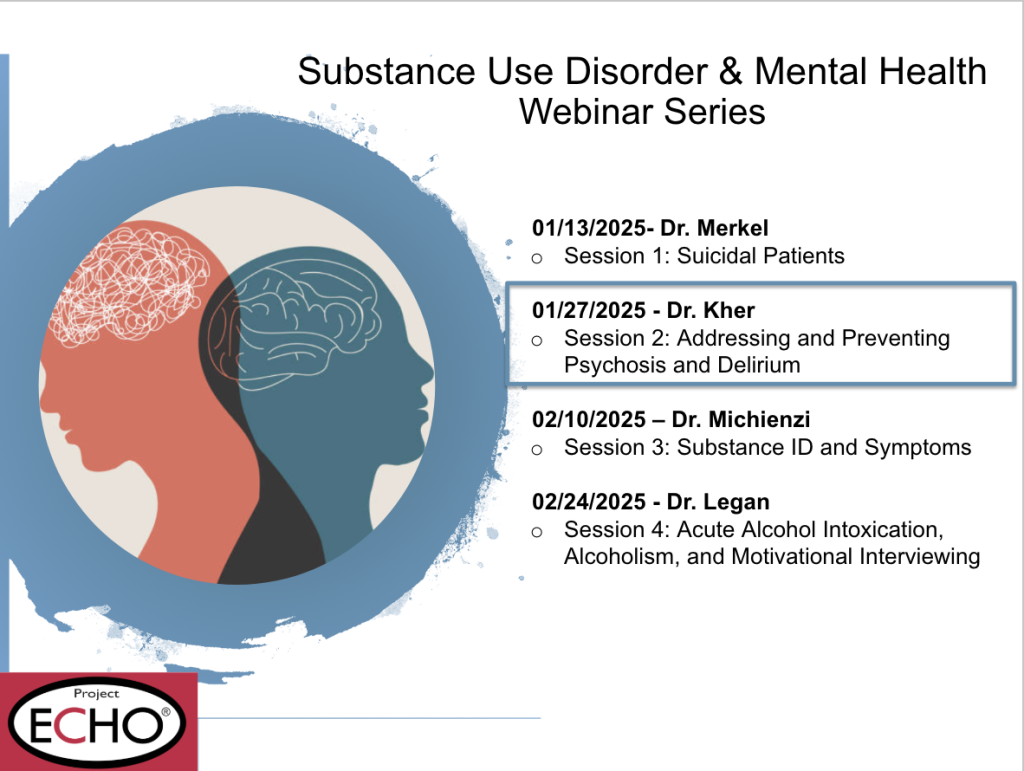
Suicidal Patients

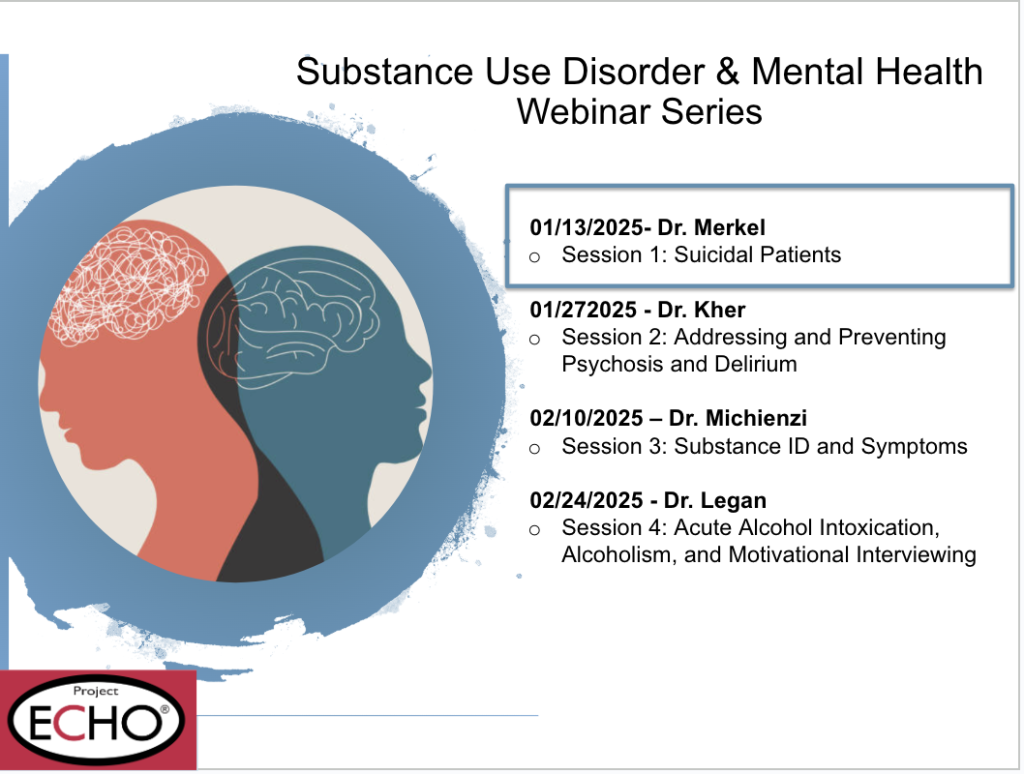
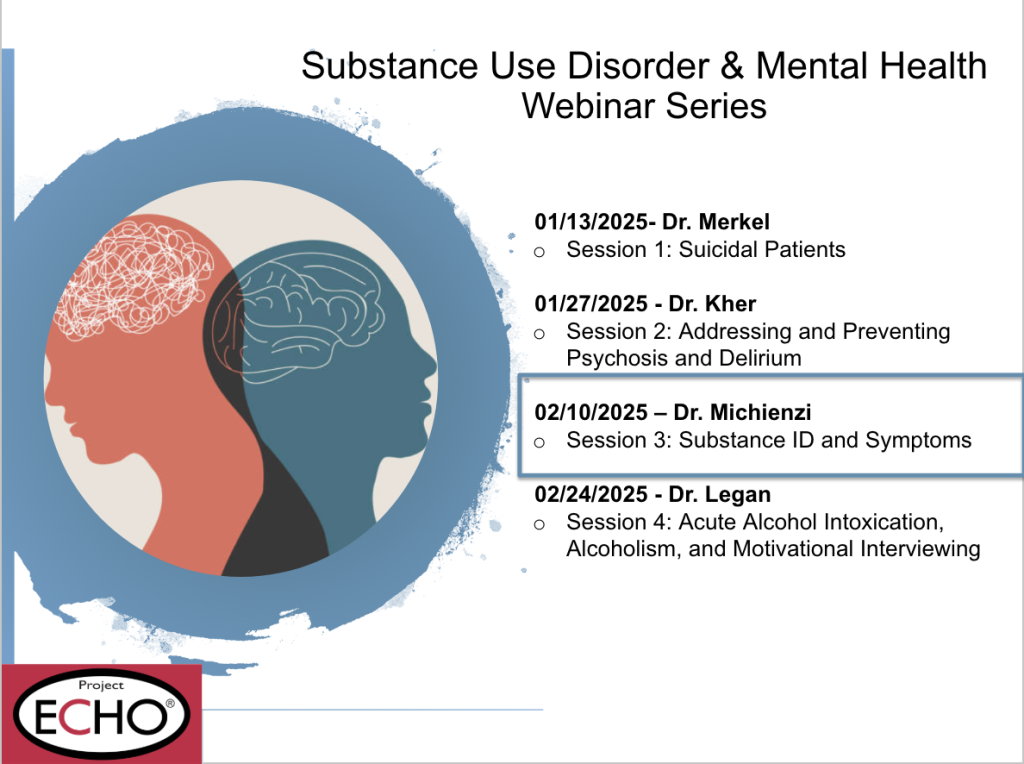
Session 1 of Substance Use Disorder & Mental Health is led by Dr. Larry Merkel. This ECHO session examines the interpersonal-psychological theory of suicide, emphasizing how suicide risk is shaped by three core factors: thwarted belongingness, perceived burdensomeness, and acquired capability. The session explores cultural variations in suicidal behavior, how to recognize “cries for help,” […]

Read More… from Suicidal Patients
Acute Endocrine Emergencies

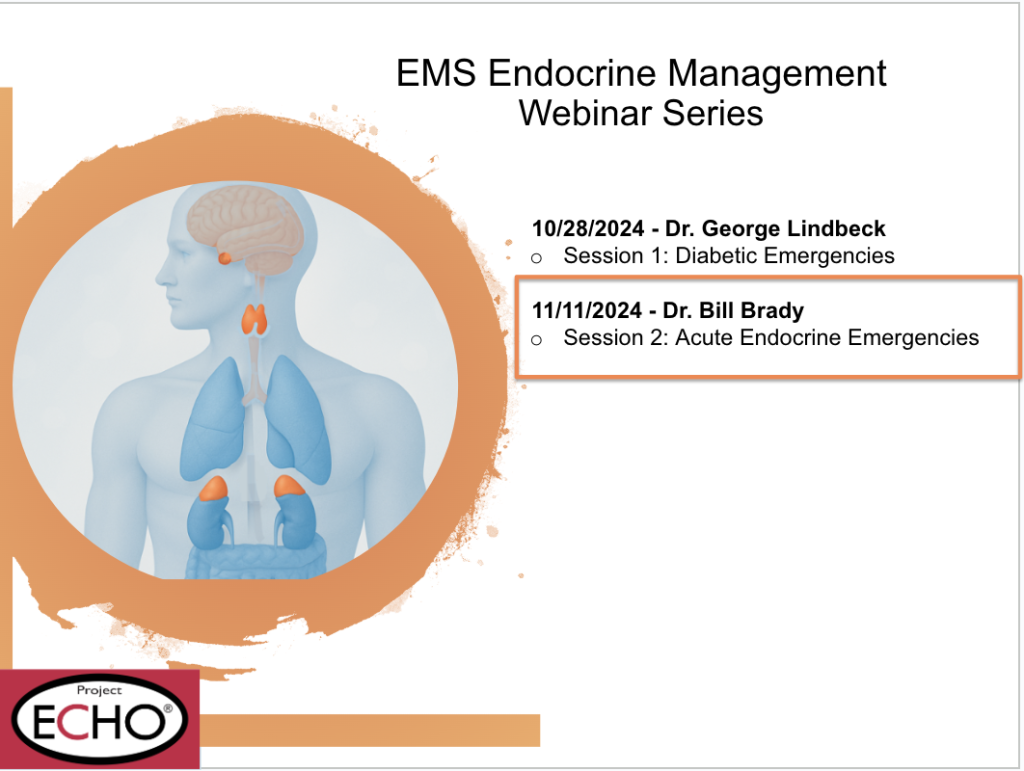
Session 2 of EMS Endocrine Management is led by Dr. Bill Brady. This ECHO session reviews endocrine emergencies including adrenal crisis, thyroid storm, myxedema coma, and pheochromocytoma–related hypertensive emergencies. Participants will explore underlying pathophysiology, including corticosteroid and thyroid hormone function, common causes and risk factors, clinical presentation, differential diagnosis, and evidence-based acute management strategies. Through […]

Read More… from Acute Endocrine Emergencies

Diabetic Emergencies

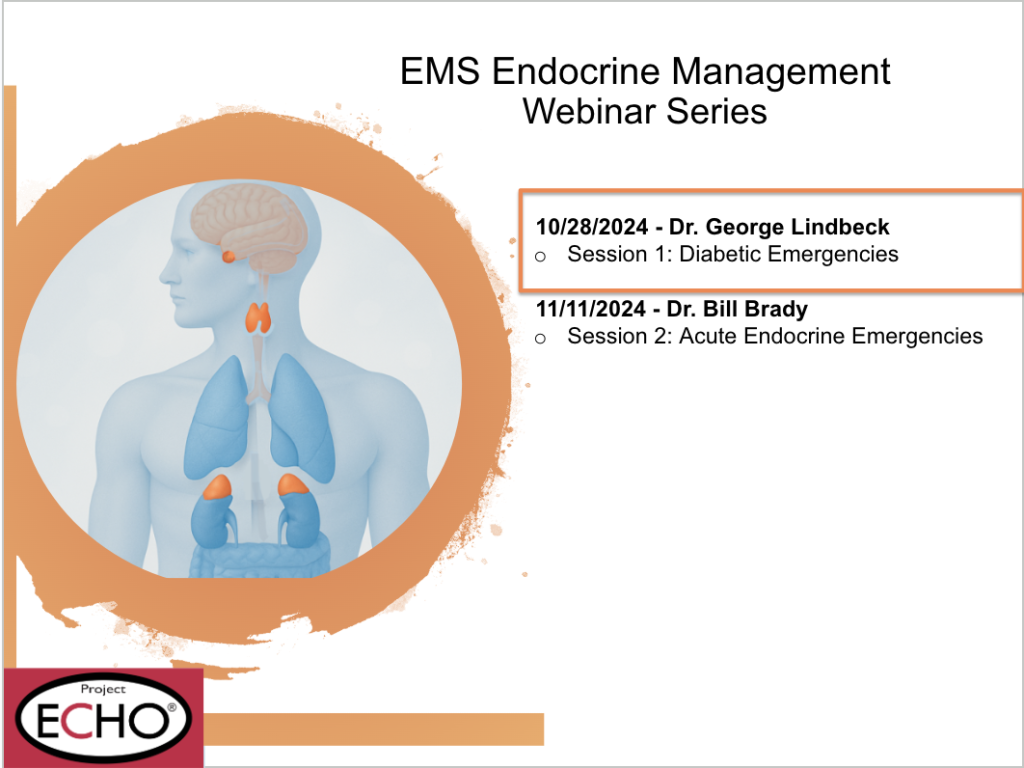
Session 1 of EMS Endocrine Management is led by Dr. George Lindbeck. This ECHO session introduces diabetes, starting with the basics of what it is, the different types, and how glucose and insulin work in the body. It reviews the importance of hemoglobin A1c, the prevalence of diabetes, and its broad impact on patients’ overall […]

Read More… from Diabetic Emergencies

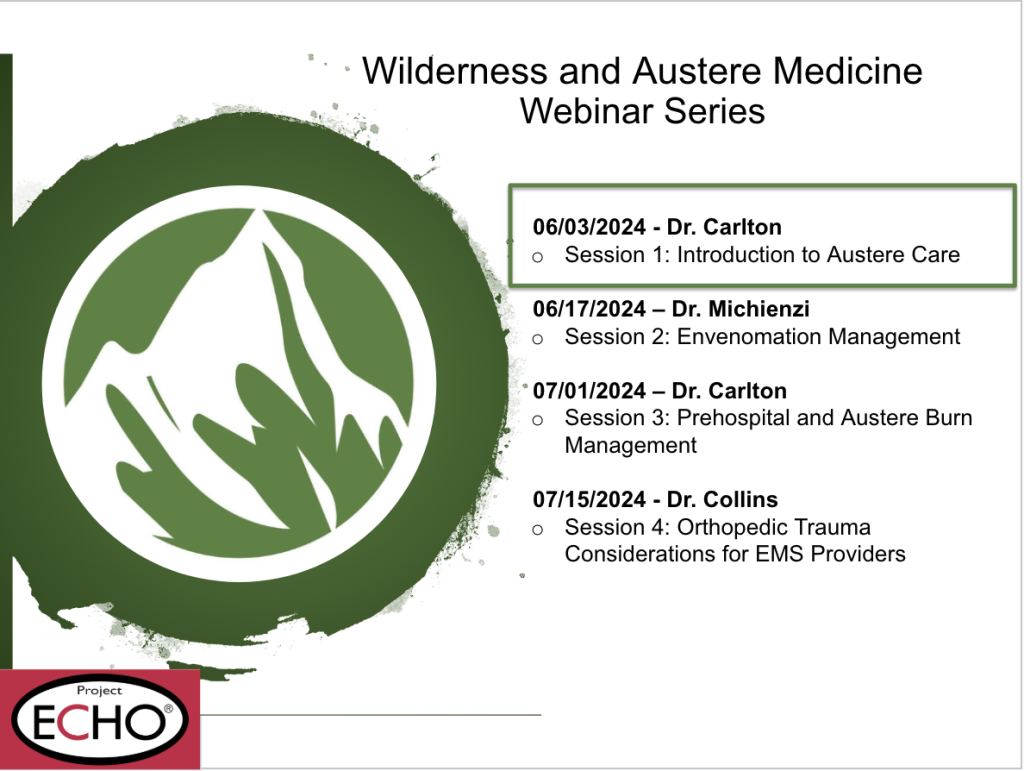
Introduction to Austere Care

Session 1 of Wildnerness and Austere Medicine is led by Dr. Duncan Carlton. This ECHO session defines austere care and explores how it differs across military and civilian contexts. Participants examine scenarios ranging from battlefield medicine to rural and resource-limited civilian settings, as well as situations where hospital systems are strained. The discussion introduces a […]

Read More… from Introduction to Austere Care
Prehospital Telestroke

Session 3 of Telestroke and Telemedicine Practice is led by Dr. Laetitia Yperzeele. This ECHO session explores introduces the stroke rescue chain and explores the role of prehospital telestroke, including its goals and structure. It examines remote and unassisted neurological assessments via telemedicine, reviews pilot study findings, and evaluates the user-friendliness and acceptability of teleconsultation systems. […]

Read More… from Prehospital Telestroke
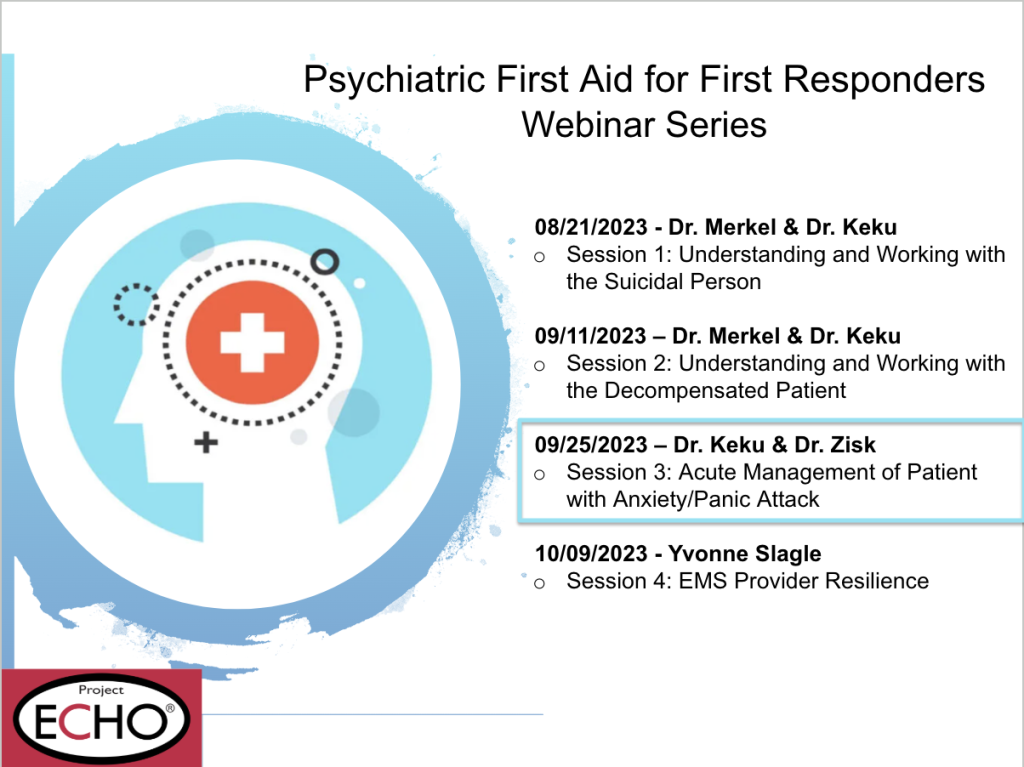
Acute Management of Patient with Anxiety/Panic Attack

Session 3 of Psychiatric First Aid for First Responders is led by Dr. Adeolu Keku and Dr. Catherine Zisk. This ECHO session reviews the recognition and management of panic attacks in emergency settings. The session outlines common physical and psychological symptoms, explores reasons patients may present with panic-related distress, and provides practical strategies for addressing […]

Read More… from Acute Management of Patient with Anxiety/Panic Attack

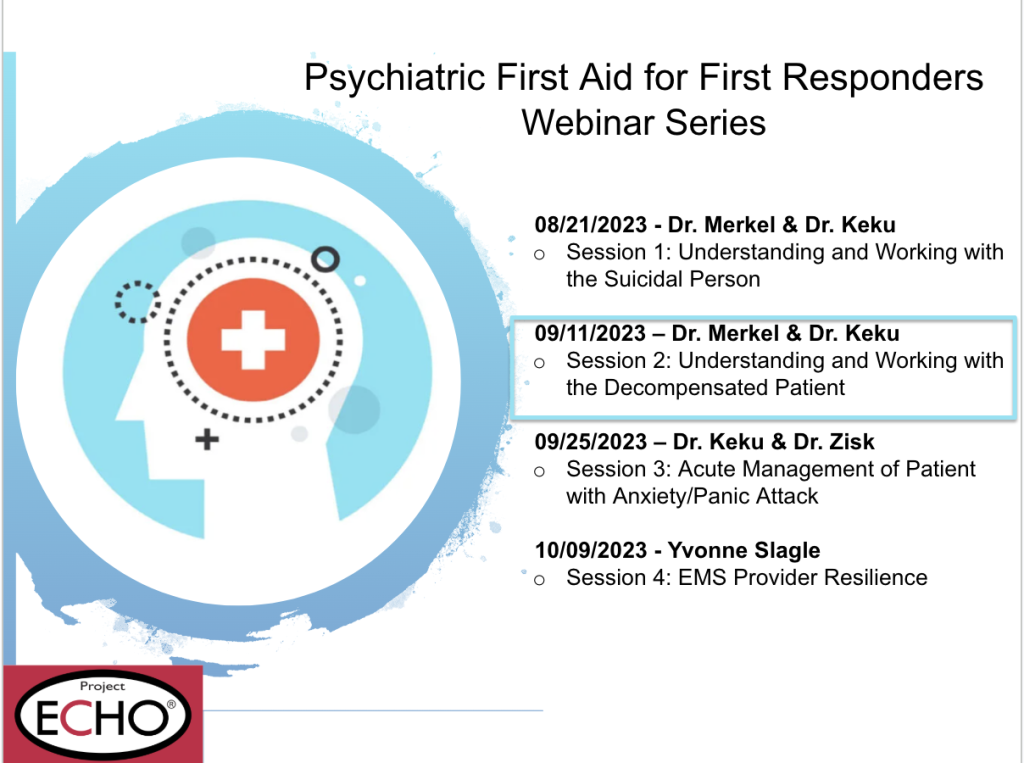
Understanding and Working with the Decompensated Patient

Session 2 of Psychiatric First Aid for First Responders is led by Dr. Larry Merkel and Dr. Adeolu Keku. This ECHO session reviews the recognition and management of psychiatric decompensation in prehospital settings, highlighting common presentations, safety considerations, and effective communication strategies. The session emphasizes empathetic assessment, key questions to ask, and clearly sharing observations to […]

Read More… from Understanding and Working with the Decompensated Patient

Understanding and Working with the Suicidal Person

Session 1 of Psychiatric Emergencies and Mental Health Resilience is led by Dr. Larry Merkel and Dr. Adeolu Keku, This ECHO session focuses on the prehospital care of patients experiencing suicidal crisis. The session features perspectives from EMS providers on their real-world experiences responding to suicidal patients and explores the clinical and cultural factors that influence […]

Read More… from Understanding and Working with the Suicidal Person

An Emerging Community Health Worker Model

Session 3 of Community Paramedicine is led by Betsy Peyton. This ECHO session introduces WellAWARE, a community health worker–led program designed to address local barriers to primary care by connecting patients with trusted, neighborhood-based support. The session outlines what makes WellAWARE distinctive, highlights the role and activities of community health workers, and explores how they help patients […]

Read More… from An Emerging Community Health Worker Model