Session 7 of Obesity Management is led by Kristen Mach. See bottom of description for accreditation info. This ECHO session explores the complex relationship between obesity and eating disorders. The session addresses myths vs. facts about weight, the limitations of BMI, the impact of weight stigma in healthcare, historical and scientific evidence on dieting and starvation, the […]
Read More… from Eating Disorders
Session 8 of Obesity Management is led by Dr. Anshu Gupta. See bottom of description for accreditation info. This ECHO session explores the role of pharmacotherapy in the management of adolescent obesity. The session reviews the prevalence of pediatric obesity, highlights key guidance from the AAP pediatric obesity guidelines, and explores how anti-obesity medications can be […]
Read More… from Treatment of Adolescent Obesity
Session 10 of Obesity Management is led by Mary Lou Perry. See bottom of description for accreditation info. This ECHO session examines the growing popularity and clinical evidence behind intermittent fasting, particularly time-restricted eating (TRE). The session defines intermittent fasting and TRE, reviews key research findings, and compares time-restricted eating with continuous energy restriction approaches […]
Read More… from Intermittent Fasting
Session 9 of Obesity Management is led by Dr. Jennifer Kirby. See bottom of description for accreditation info. This ECHO session focuses on understanding and managing the side effects associated with anti-obesity medications. The session reviews common gastrointestinal and non-gastrointestinal side effects patients may experience, including those related to incretin-based therapies, phentermine, and the bupropion/naltrexone […]
Read More… from Managing Obesity Medication Side Effects
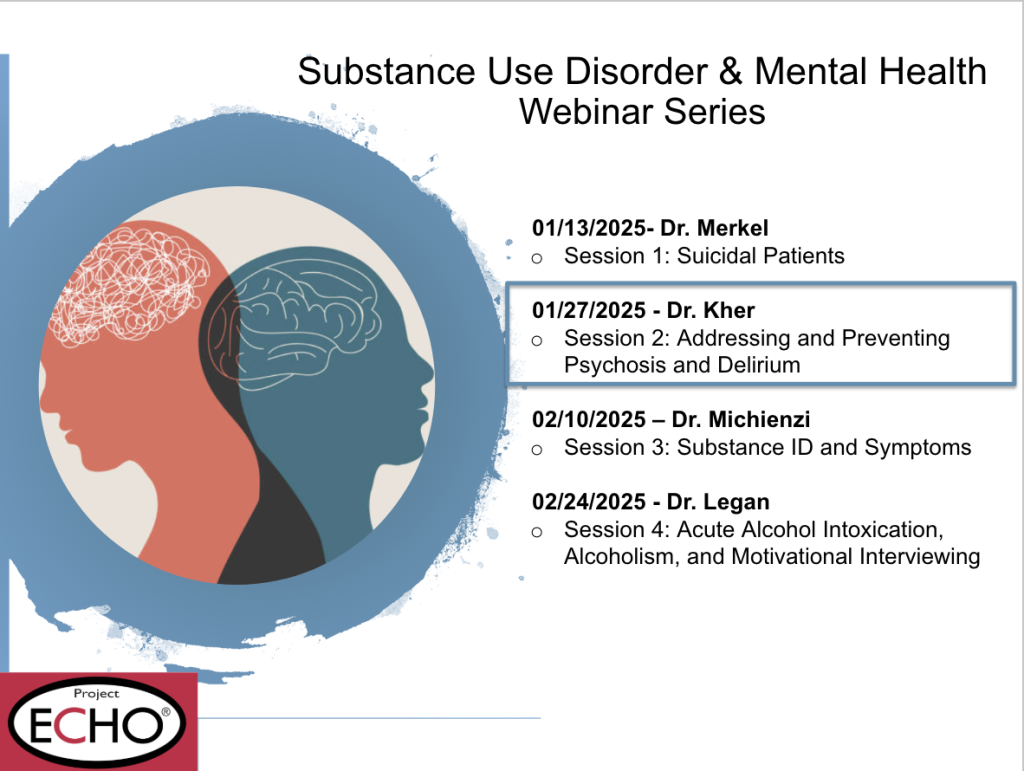
Session 2 of Substance Use Disorder & Mental Health is led by Dr. Hema Kher. This ECHO session reviews the recognition and management of psychosis and delirium in acute care settings. Participants will learn to identify common symptoms of psychosis, explore underlying causes and diagnostic considerations, and review practical management strategies. The session also examines […]
Read More… from Delirium and Psychosis
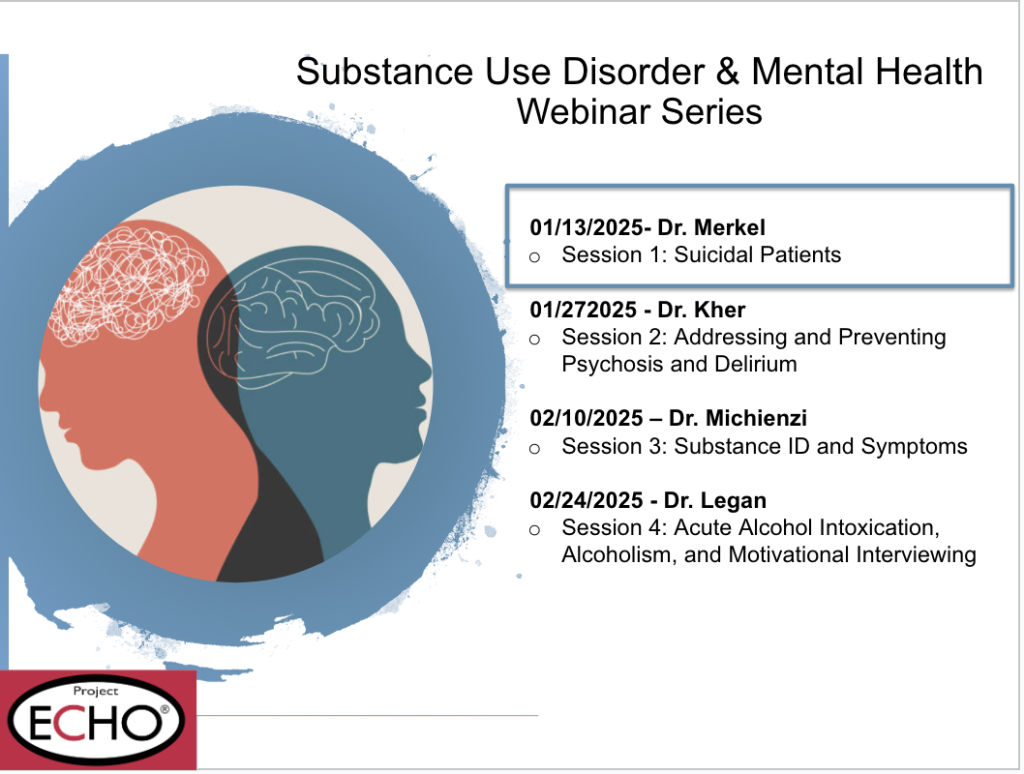
Session 1 of Substance Use Disorder & Mental Health is led by Dr. Larry Merkel. This ECHO session examines the interpersonal-psychological theory of suicide, emphasizing how suicide risk is shaped by three core factors: thwarted belongingness, perceived burdensomeness, and acquired capability. The session explores cultural variations in suicidal behavior, how to recognize “cries for help,” […]
Read More… from Suicidal Patients